All, NIRF, HECI
Jan 14, 2026
NHERC Nightmare: UGC Autonomy GONE Overnight – One Audit Slip and You're SHUT DOWN!
HECI and NHERC: What Higher Education Institutions Need to Prepare for Now
India’s higher education regulatory framework is undergoing a major transformation with the proposed implementation of the Higher Education Commission of India (HECI). These reforms aim to enhance transparency, accountability, and quality while requiring institutions to adapt to a new compliance-driven ecosystem.
HECI Changes Ahead
Expect a total regulatory purge: UGC dissolves into HECI's four verticals, NHERC taking charge of all non-medical/legal HEIs with "light but tight" rules. Autonomy erodes as mandatory NAC binary accreditation (pass/fail) replaces graded systems, tech-driven audits replace paperwork, and public data dashboards expose every flaw from finances to faculty ratios.
NHERC's Powers
The National Higher Education Regulatory Council (NHERC) is proposed as the primary regulator for non-medical and non-legal higher education institutions, with responsibility for ensuring baseline academic, governance, and infrastructure standards. Its mandate is expected to include compliance monitoring through technology-enabled data reporting, periodic and risk-based audits, and the imposition of proportionate penalties where deficiencies persist. Regulatory permissions—such as programme approvals, institutional autonomy, and expansion—are likely to be linked to accreditation status under the national accreditation framework, with enforcement actions, including restrictions or suspensions, subject to defined due-process mechanisms.
Transparency and Digital Oversight
Institutions may be required to disclose data related to faculty strength, infrastructure, student outcomes, governance practices, and financial sustainability. Much of this information is expected to be publicly accessible, increasing institutional visibility and accountability.
Dire Consequences
Non-compliance triggers funding blackouts, program halts, or outright closures - no grandfathering shields legacy UGC approvals. Reputations crumble under forced disclosures; smaller colleges face survival crises amid rushed re-alignments to vague NEP outcome metrics.
Aided vs. Unaided Institutions
Aided colleges lose grant protections, facing performance-tied funding cuts and potential mergers if NAC standards falter, shifting toward self-reliance. Unaided institutions endure intensified financial scrutiny and disclosure mandates without aid buffers, risking expansion blocks and market exclusion for non-compliance.
Impacts on Aided Institutes
Government-funded aided colleges lose legacy grant protections, with funding now performance-based via HEGC linked to NHERC/NAC standards—non-compliance triggers aid cuts, forcing fee hikes or mergers. Many smaller aided entities face viability threats amid phasing out affiliations.
Impacts on Unaided Institutes
Private unaided colleges encounter heightened scrutiny on finances, governance, and outcomes, needing to invest in tech infrastructure for real-time disclosures. Without grants, failure to secure NAC status blocks student aid eligibility and expansion approvals, amplifying market pressures.
Urgent Safety Measures
Adaptation will span years—START NOW with STUDIUM with internal audits, NAAC enhancements toward NAC readiness, and NIRF data mastery for competitive edge.
Partner with STUDIUM for automated NIRF analysis, accreditation tracking, and compliance dashboards; STUDIUM streamlines data collection, benchmarking, and reporting to future-proof operations efficiently.
Contact STUDIUM today to initiate consultations and safeguard your institution's trajectory.
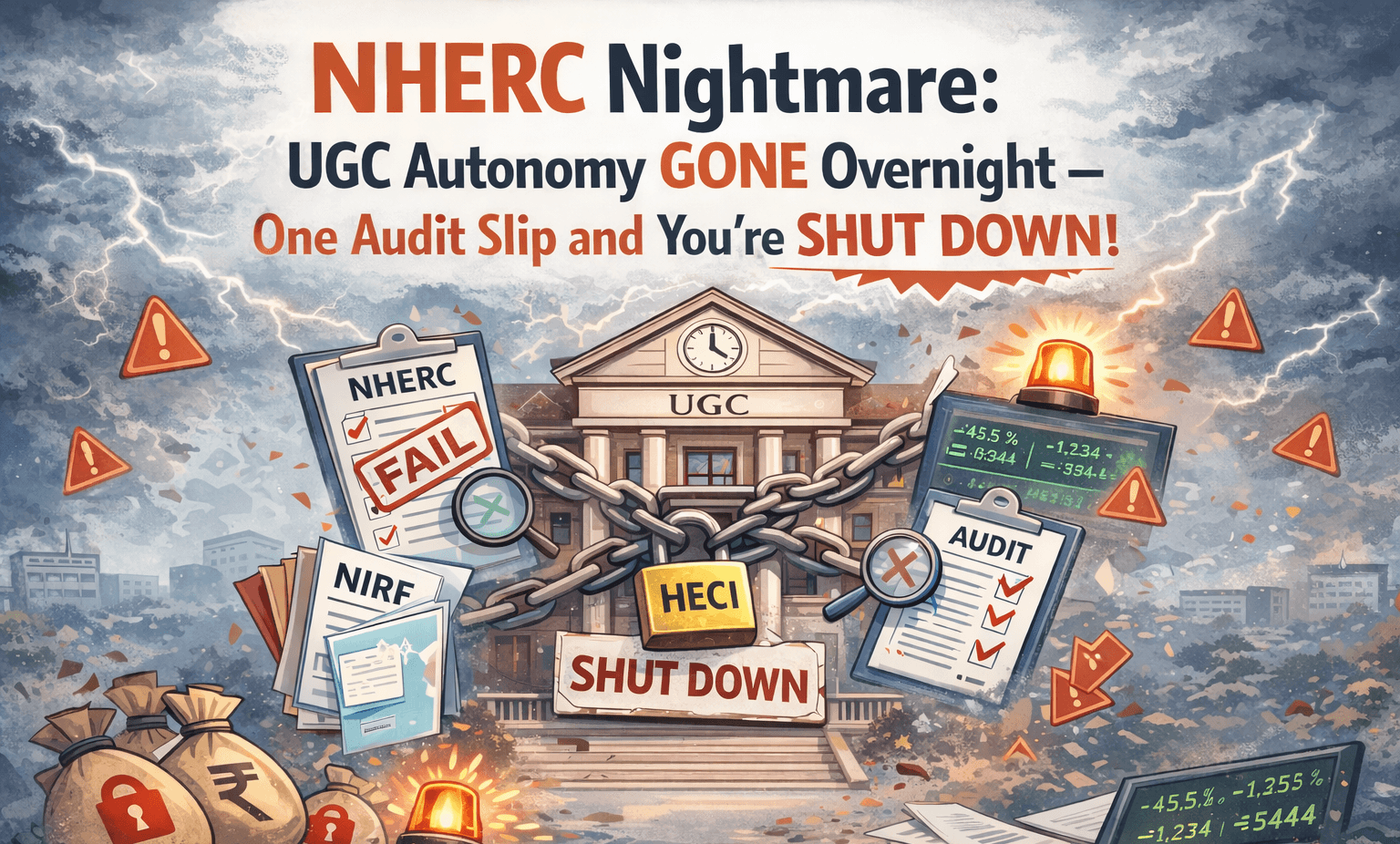
NHERC Nightmare: UGC Autonomy GONE Overnight – One Audit Slip and You're SHUT DOWN!
All, NIRF, HECI
Read More
https://www.youtube.com/watch?v=PCUJ0_dXF10